

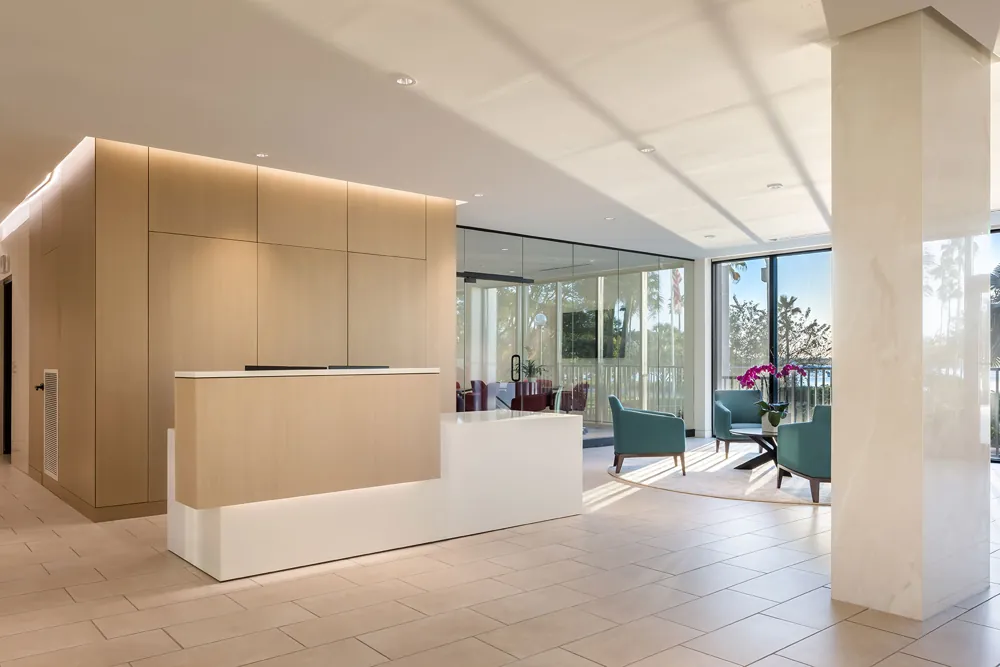
A hospitality general contractor helps hotels, resorts, restaurants, and entertainment venues renovate without allowing construction to take over the guest experience. The right contractor plans the work around occupancy, dining service, events, staff operations, guest access, and the spaces that generate revenue, then coordinates each phase so the property can improve while remaining as comfortable, safe, and functional as possible. For hospitality operators, that level of planning turns renovation from a source of uncertainty into a more controlled investment in the property’s future.
Guests notice more than a finished lobby, refreshed guest room, improved restaurant, or upgraded amenity. They notice whether they can find the entrance, whether public areas feel clean and safe, whether service moves smoothly, and whether temporary conditions are clear and professionally managed. A poorly planned renovation can create noise, dust, blocked circulation, delayed service, confusing signage, and staff frustration that weaken the experience the project is meant to improve. A well-planned renovation protects the business while it builds toward a better version of the property.
That is why hospitality construction requires more than field production. It requires early planning, schedule discipline, clear communication, careful phasing, coordinated trade work, safe access, and a detailed understanding of how people use the property. Hotels may need to preserve room inventory. Restaurants may need kitchens and dining areas available during revenue-producing hours. Resorts may need to maintain amenities, event spaces, and guest routes during busy periods. Entertainment venues may need construction activity coordinated around performances, private events, and visitor flow.
At Magnum Builders, we bring General Contracting, Construction Management, Design-Build, and preconstruction experience to commercial projects that require this kind of operational awareness. We work with owners and property teams to define the scope, assess existing conditions, organize schedules, coordinate trade partners, plan work zones, and establish a communication process that keeps the project moving without losing sight of the people using the facility every day.
How can a hotel or restaurant renovate while protecting guest experience?
Hotels and restaurants can renovate while protecting guest experience by dividing the work into phases, keeping guest routes open and clearly marked, completing the loudest or most disruptive tasks during low-impact hours, and returning each finished area to service only after cleaning, inspection, and quality checks. The construction schedule should be built around occupancy, dining hours, events, deliveries, staffing, and revenue-producing spaces before work starts.
The Westin Resort & Spa, Whistler provides a practical hospitality example: its current room refresh is being completed in two phases while its lobby, dining venues, fitness studio, spa, pools, and meeting spaces remain open and operational. That approach illustrates how deliberate phasing can preserve key guest amenities while major property upgrades move forward.
A hospitality general contractor leads the planning and construction work needed to renovate, expand, modernize, or build guest-facing commercial spaces. The role can include hotel guestroom renovations, lobby and common-area upgrades, restaurant buildouts, kitchen improvements, bar and lounge renovations, resort amenity work, event-space updates, exterior improvements, life-safety upgrades, building-system replacements, tenant improvements, and larger commercial expansions. The contractor coordinates the people, schedules, materials, safety systems, and logistics required to bring the work from planning through final turnover.
For hospitality owners, the contractor is the central source of construction coordination. The team reviews the scope, develops schedules, manages qualified trade partners, tracks procurement, oversees field activity, protects quality and safety, arranges inspections, and communicates with ownership, designers, property managers, vendors, and facility staff. In active properties, the contractor also plans temporary barriers, guest routes, staff routes, deliveries, work hours, utility shutdowns, signage, housekeeping coordination, and the sequence for returning renovated spaces to use.
The job begins long before construction activity becomes visible. A hotel renovation contractor should help define the project goals, identify existing-building conditions, review the operational schedule, assess the budget, identify long-lead materials, and recommend a phasing strategy. If the project involves a restaurant kitchen, the contractor coordinates mechanical, electrical, plumbing, exhaust, fire protection, equipment, and health-related requirements. If the project involves guest rooms, the contractor plans work around occupied and vacant inventory, housekeeping, elevators, service corridors, and access controls. If the project involves a lobby or public amenity, the contractor considers guest flow, appearance, wayfinding, temporary services, and brand expectations.
The contractor’s responsibility is not simply to finish construction. It is to organize the work in a way that allows the property to remain operationally credible throughout the process. That requires practical judgment about which areas can be taken offline, when disruptive work can happen, how people will move safely through the property, and how the owner will stay informed when conditions change.
Many hospitality businesses can remain operational during renovations when the scope is phased around the property’s actual operating needs. The right approach keeps essential guest routes, revenue-producing spaces, service functions, and life-safety systems available while targeted areas are renovated in an orderly sequence. Whether a property should remain open depends on the work, building conditions, safety requirements, available temporary space, and the business impact of closing specific areas.
For a hotel, keeping the property open may mean renovating rooms by floor, wing, or stack while preserving enough inventory to meet occupancy commitments. It may mean scheduling public-area work during lower-traffic periods or maintaining temporary routes around an active lobby. For a restaurant, it may mean doing kitchen work during closed hours, renovating dining zones in sections, or establishing a temporary service model during a focused phase. For a resort, it may mean sequencing amenities so guests continue to have usable options throughout the project.
The decision should be based on honest planning, not an automatic promise that every renovation can proceed without closure. Some work requires a controlled shutdown because it affects critical systems, guest safety, kitchen operations, or major access routes. The National Park Service noted that the Ahwahnee Hotel’s complete kitchen renovation required an approximately eight-week closure to accomplish the work safely, while broader hotel improvements were structured as part of a phased rehabilitation program. That example reinforces an important point: the best operational strategy is the one that protects guests, staff, and the project, even when it includes a limited and purposeful closure. [web:70][web:71]
A strong contractor helps owners evaluate the options. The team can compare phased work, after-hours activity, temporary operations, planned closures, and sequencing strategies against schedule, cost, guest experience, and revenue impact. The objective is not to avoid every inconvenience. It is to choose the path that manages disruption deliberately instead of allowing it to dictate the project.
Contractors protect guest experience by treating access, cleanliness, safety, communication, and visual conditions as core project requirements. Guests should understand where to enter, which amenities are available, how to reach dining or event spaces, and what areas are temporarily affected. The construction environment should be secure, clean, and clearly separated from public areas so guests can continue using the property with confidence.
Work-zone planning is a central part of this effort. Temporary barriers need to be secure and appropriate for a guest-facing environment. They should separate construction from active areas while supporting a clean, professional appearance. Signage should make routes easy to follow without overwhelming public spaces. Materials, equipment, and debris should be moved through controlled routes and scheduled around guest traffic whenever possible. The contractor coordinates these details with property management so construction logistics support, rather than compete with, daily operations.
Noise, dust, vibration, odors, and utility disruptions require the same level of planning. The contractor identifies activities with the greatest operational impact and works with the owner to schedule them during lower-impact periods. Some work may need to happen overnight, during limited daytime windows, or when specific areas are temporarily closed. The plan should include protections, notifications, and contingency steps so staff and guests are not surprised by activities that could affect comfort or service.
Communication with staff is equally important. Front-desk teams, restaurant managers, housekeeping, maintenance, food-and-beverage personnel, security, event staff, valet teams, and other employees may be affected by changing access, work zones, deliveries, and schedules. A contractor provides look-ahead information so property leadership can prepare teams, update guests, adjust service routes, and maintain consistent standards. When employees understand the plan, they are better positioned to deliver a calm and professional experience despite temporary conditions.
Phased construction is the most practical way to renovate many active hospitality properties without taking the entire operation offline. The contractor divides the project into defined work areas, then completes each area through preparation, protection, demolition, construction, inspection, cleaning, quality review, and turnover before moving into the next phase. This gives the owner a structured path for balancing construction progress with ongoing guest service.
The best phase plan begins with the property’s priorities. The contractor needs to know which rooms, amenities, dining areas, event spaces, entrances, service corridors, and guest routes are most important to keep active. It also needs to understand occupancy cycles, booked events, restaurant service hours, delivery periods, staffing patterns, and maintenance requirements. These facts determine how the work can be sequenced without creating avoidable pressure on the operation.
For a hotel, a phase may cover a block of guest rooms, a section of a floor, a corridor, a lobby zone, or a meeting room. For a restaurant, a phase may cover part of the dining room, a bar area, a patio, a kitchen zone, a restroom, or an entry. For a resort, it may involve a pool, spa, fitness area, clubhouse, event space, retail location, or group of guest units. The construction approach changes, but the principle remains the same: preserve the functions that matter most while targeted areas are improved.
Each phase requires a clear turnover standard. The contractor coordinates required inspections, finish work, cleaning, corrections, equipment testing, and final quality checks before releasing the space back to the property. This matters because an unfinished or poorly prepared area can create operational problems even when the major construction work is technically complete. Clean turnover milestones help property teams plan staffing, marketing, bookings, and service around reliable dates.
Scheduling is a core hospitality construction tool because it connects renovation activity to business performance. A missed turnover date can affect room inventory, restaurant capacity, events, guest satisfaction, staff schedules, and revenue. The contractor must build a schedule that includes not only construction tasks but also design approvals, permits, owner decisions, long-lead procurement, trade manpower, access restrictions, inspections, utility work, cleaning, and final turnover.
The most important hospitality dates should be identified early. A hotel may need a room block complete before a peak season or group arrival. A restaurant may need to reopen before a scheduled event or holiday period. A resort may need a key amenity available for a high-demand season. These requirements become schedule milestones, and the contractor works backward to identify the activities that must be completed on time to protect them.
Long-lead items are a frequent source of avoidable delay. Hospitality renovations may require custom millwork, specialty finishes, furniture, fixtures, lighting, kitchen equipment, doors and hardware, branded materials, technology components, or mechanical equipment. The contractor helps identify these items early, coordinate selections and submittals, confirm availability, and establish procurement dates that support the planned turnover. A room or restaurant area can be substantially complete yet remain unavailable if one critical component arrives late.
Trade coordination keeps the schedule workable in the field. Framing, mechanical, electrical, plumbing, fire protection, ceilings, flooring, millwork, finishes, technology, and specialty trades all need access in the right order. The contractor uses short-term look-ahead planning and field coordination to confirm that prerequisites are complete, materials are available, and work areas are ready before each trade arrives. This reduces idle time, rework, and the risk that one local issue will create a larger schedule problem.
Magnum Builders’ preconstruction service information describes Critical Path Method scheduling that incorporates owner completion requirements, design and preconstruction tasks, pricing and contracting, construction activities, material lead times, manpower needs, and Florida weather. This type of project control is especially relevant to hospitality renovations, where operating windows and turnover dates need to be coordinated with the same discipline as field production. [web:15]
Restaurant renovations require precise coordination because the work can affect food preparation, service flow, customer seating, utilities, equipment, health requirements, staffing, and revenue-producing hours. A project may include a new kitchen layout, upgraded cooking equipment, ventilation improvements, bar renovation, dining-room refresh, patio expansion, restrooms, finishes, lighting, point-of-sale infrastructure, or accessibility upgrades. Each change must be planned around how the restaurant serves guests.
Kitchen work requires especially careful planning. Mechanical systems, electrical service, plumbing, gas, exhaust, refrigeration, fire suppression, equipment installation, and health requirements must be coordinated as one connected system. A contractor brings the appropriate trade expertise into preconstruction so the design responds to the actual conditions and installation requirements. This reduces the chance of discovering conflicts after the kitchen has been taken out of service.
The guest-facing side of the restaurant needs equal attention. A renovation may alter how guests enter, wait, order, dine, pay, and exit. It may affect staff routes between kitchen, bar, dining areas, storage, and service stations. The contractor works with the owner and design team to make sure construction sequencing supports the finished operational flow rather than creating a space that looks updated but functions poorly during service.
When a restaurant stays open, the project may require after-hours work, day-of-week scheduling, carefully defined construction zones, temporary service areas, or a short planned closure for critical work. The right plan gives the owner a clear understanding of when utilities will be affected, how deliveries will be handled, what seating will be unavailable, and how staff and guests will navigate temporary conditions. That clarity helps protect customer relationships while the business invests in improvement.
Construction Management and Design-Build can both help hospitality owners gain stronger control over complex renovations. Construction Management brings contractor expertise into planning, design coordination, budgeting, scheduling, procurement, and field oversight. This is useful when an owner needs early advice on scope, phasing, operating constraints, or trade coordination before construction documents are complete.
Design-Build combines design and construction under one coordinated team. Instead of managing a separate design contract and construction contract, the owner works with a team that aligns design decisions, budget information, schedule logic, materials, and construction methods from the beginning. This can simplify communication and help the owner understand how a design choice affects procurement, installation, guest access, and project duration before the choice becomes difficult to change.
The best delivery method depends on the project. A traditional General Contracting approach may work well when the design is complete and the owner needs disciplined field execution. Construction Management may be valuable when planning and preconstruction input are important. Design-Build may be a good fit when speed, integrated accountability, and early coordination are priorities. The most important step is selecting a process that matches the property’s operational complexity, budget, schedule, and decision-making structure.
At Magnum Builders, we provide General Contracting, Construction Management, Design-Build, and preconstruction services so hospitality owners can select a delivery approach that fits the project rather than forcing every renovation into the same model. Our Construction Management service is designed to oversee planning, design, and construction with the objective of controlling time, cost, and quality, while our Design-Build approach offers a single point of responsibility for coordinated project delivery.
Hotels should expect a successful upgrade to begin with detailed preconstruction planning. The contractor and property team need to identify the scope, assess existing conditions, establish the budget, confirm schedule priorities, evaluate phasing, identify long-lead items, and determine how guest and staff operations will be protected. The earlier this work begins, the more options the owner has to make practical decisions before construction activity affects the property.
During the renovation, hotels should expect temporary changes in certain areas. Guest routes may shift, work zones may be protected by barriers, deliveries may follow different paths, and selected spaces may be unavailable during specific phases. A strong contractor communicates these conditions clearly and works with the property team to make them understandable for staff and guests. The goal is to avoid surprises and provide a predictable operating plan for each phase.
Hotels should also expect field discoveries in existing buildings. Walls, ceilings, and building systems can reveal conditions that were not visible during initial planning. Experienced contractors prepare for this possibility by investigating early, building reasonable contingencies into the plan, and communicating findings quickly. What matters is not whether every unknown can be eliminated. What matters is whether the team has a disciplined process for evaluating conditions and protecting the project when they arise.
At turnover, the hotel should expect more than a completed construction area. The space should be inspected, cleaned, tested, corrected where needed, and ready for the property’s intended use. The contractor coordinates final work with the property so room blocks, public spaces, amenity areas, or back-of-house functions can return to operation with confidence.
Hospitality owners should select a contractor based on relevant experience, planning strength, scheduling systems, communication practices, and an understanding of guest-facing operations. A contractor may have commercial construction experience but still lack the operational awareness needed to work around occupancy, food service, events, public access, staff workflow, and brand standards. The right partner understands that these factors are part of the construction plan.
The contractor should be able to explain how it will develop the project schedule, identify long-lead items, coordinate trade partners, manage work zones, protect guest access, and communicate upcoming changes. It should ask clear questions about the property’s business priorities, peak periods, event calendar, occupancy commitments, and areas that cannot be disrupted. Those early questions show whether the contractor sees the renovation as a business project as well as a building project.
Owners should also evaluate budget transparency. They need to understand how estimates are developed, what assumptions remain open, how existing conditions will be investigated, how phasing affects cost, and how changes will be managed. A reliable contractor provides clear information so owners can make timely decisions with an understanding of cost and schedule impact.
Finally, the working relationship matters. Hospitality renovations require regular coordination between contractor, owner, property management, design team, staff, and trade partners. The contractor should provide a clear point of contact, consistent progress information, and a practical process for solving issues. When communication is organized, the property team can focus on guests and operations while the contractor leads construction.
A successful hospitality renovation improves the property without asking guests to absorb the full impact of construction. The goal is to create better rooms, more effective restaurants, stronger amenities, improved public spaces, and more efficient support areas while protecting the service, access, comfort, and confidence that make people choose the property in the first place.
That outcome depends on disciplined construction leadership. A hospitality general contractor brings structure to the work through early planning, phased sequencing, schedule control, trade coordination, guest-focused logistics, safety planning, and consistent communication. When the process is organized around how the property operates, renovation becomes an investment that supports both current guests and future growth.
If you are planning a hotel renovation, restaurant improvement, resort upgrade, entertainment-venue refresh, or other guest-facing commercial project, contact Magnum Builders to discuss the project’s scope, operating needs, timing, and delivery options. We can help you create a planning path that keeps the work moving while keeping the guest experience in focus.
Contact Magnum Builders for Your Hotel Renovation

