

Hiring a government construction contractor is one of the most consequential decisions a public agency will ever make. Unlike a private developer, a municipality, school district, water authority, or aviation department is spending public money under public scrutiny, on facilities that entire communities will depend on for decades. The selection process that follows is not simply a search for the lowest number on a bid sheet. It is a structured evaluation of capability, accountability, compliance discipline, scheduling control, and long-term reliability, conducted by people who know they will answer for the outcome in front of boards, taxpayers, and sometimes auditors.
Large-scale public-sector projects — municipal buildings, schools, aviation infrastructure, water and wastewater facilities, parks and civil improvements — carry layers of complexity that private commercial work rarely matches. Agencies know this, and their hiring decisions reflect it. This pillar page examines what public agencies actually look for before they award a major contract, why public-sector construction demands more from contractors than most owners realize, and how experienced firms like Magnum Builders meet those expectations across Southwest Florida.
What should a public agency verify before hiring a government construction contractor for a large-scale project?
Before hiring a government construction contractor, a public agency should verify proper state licensing, prequalification and bonding capacity, documented experience on comparable public projects, safety performance metrics, financial stability, and the contractor's ability to comply with procurement statutes, wage requirements, and public records obligations throughout the contract.
This verification framework mirrors the construction contracting standards codified in FAR Part 36 — Construction and Architect-Engineer Contracts, the regulation that governs how public agencies define requirements, prequalify firms, and award construction contracts. Florida's state and local procurement frameworks apply the same discipline: verify capability before price, and require the documentation that makes performance auditable.
Agencies that skip this verification consistently inherit the consequences — underqualified firms, stalled schedule recovery, and documentation gaps that surface during audit. The verification checklist is not bureaucracy; it is the agency's cheapest form of risk insurance, and it belongs at the front of every solicitation, not the back of a troubled project.
A government construction contractor plans, manages, and executes construction projects for public-sector owners. That scope extends well beyond the physical act of building. On any given project, the contractor is responsible for coordinating with public officials and stakeholders, interpreting agency procurement rules, securing permits and regulatory approvals, managing subcontractors under public contracting statutes, maintaining certified payroll and documentation trails, and delivering a facility that will pass not only inspection but also public accountability for years after completion.
Government general contractors work under delivery methods that agencies select based on their statute authority and their risk tolerance, including hard bid, Construction Management at Risk, Design-Build, and continuing or indefinite-delivery contracts for recurring capital programs. Government infrastructure contractors handle roads, utilities, water systems, and civil improvements. Government building contractors deliver vertical construction such as schools, administrative buildings, fire and police stations, libraries, and aviation terminal or airside facilities. On the largest programs, a contractor may operate across several of these categories at once, which is exactly the breadth agencies screen for during prequalification.
The defining difference in this work is that the client is a public entity governed by open procurement laws. Every dollar spent, every change order approved, and every day added to a schedule is subject to records requests, board review, and in many cases external audit. Contractors who succeed in this environment treat documentation, transparency, and procedural compliance as core competencies, not administrative burdens.
Public-sector construction is more complex than comparable private work for reasons that go far beyond project size. The first driver is procurement law. Public agencies must follow competitive selection statutes that dictate how solicitations are advertised, how bids are opened and evaluated, how protests are handled, and how contracts are modified once awarded. A private owner may negotiate freely; a public owner operates inside a rulebook, and the contractor must understand that rulebook as thoroughly as the agency does.
The second driver is stakeholder volume. A municipal building project may involve the city manager, the facilities department, the user department, the finance office, the city attorney, elected officials, and the public itself. A school construction program layers in district administrators, principals, teachers, parents, and the state educational facilities code. Each stakeholder carries different definitions of success, and the contractor's communication systems must serve all of them without losing control of schedule and cost.
The third driver is the occupied and operating environment. Most public work happens in facilities that never close. Schools must keep teaching through renovations. Airports cannot interrupt passenger operations or compromise security zones. Water treatment plants must deliver safe water every hour of every day, regardless of the construction phase underway thirty feet from live process equipment. This is where contractor experience becomes non-negotiable: phasing plans, logistics corridors, outage coordination, and safety separation are engineered decisions, not improvisations.
Finally, funding structures add duration and scrutiny. Many public projects move through bond issues, grants, appropriations cycles, or phased capital improvement plans that stretch across fiscal years. Contractors must manage cash flow, retainage, payment certification, and documentation in formats that satisfy auditors who may review the project long after completion. Rarely does a private project test a contractor's administrative systems this thoroughly.
The agencies that run the best procurement processes evaluate contractors across a consistent set of dimensions, and experienced contracting officers will tell you they are remarkably predictive of project outcomes.
Relevant, verifiable public-sector experience comes first. An agency rarely wants a contractor's first government project to be their project. They look for a track record with owners like themselves — completed schools for a school district, water facilities for a water authority, municipal or aviation work for cities and airport operators. Reference checks in public work are unusually candid because contracting officers talk to each other across jurisdictions, and reputation travels fast in the public sector.
Financial capacity and bonding come next. Surety bonding on public projects is not a formality; it is the agency's financial backstop against contractor default. Agencies examine bonding capacity, financial statements, and lines of credit because a contractor under financial stress becomes schedule delay, unpaid subcontractors, and liens — all of which become the agency's problem. A contractor's surety relationship is effectively a third-party underwriter's vote of confidence in that firm's management and balance sheet.
Safety performance is a formal screening criterion, not a talking point. Agencies review experience modification rates, OSHA recordables, and written safety programs before award, because a contractor's safety culture on a public site affects workers, facility occupants, and the public — and creates liability exposure that transfers to the owner.
Depth of management and administrative systems matters as much as craft capability. Agencies want to see the named project manager and superintendent, the scheduling software and methodology, the quality control protocols, the submittal and RFI management process, and the change order documentation discipline that keeps small problems from becoming claims. Continuing service contracts, which distribute billions in public work annually through standing agreements, weed out firms that cannot sustain administrative rigor over years of smaller work orders.
Finally, sophisticated agencies evaluate how a contractor handles the preconstruction phase. A firm that invests in thorough cost estimating, constructability review, value engineering, and early subcontractor coordination before construction begins is protecting the agency's budget in ways that a low bid on a bad set of documents never will.
Phased construction allows hospitality properties to renovate defined areas in a sequence while keeping other parts of the business active. Instead of closing an entire hotel, restaurant, or resort, the contractor divides the work into manageable zones, floors, room blocks, guest areas, service spaces, or construction packages. Each phase is prepared, protected, renovated, inspected, cleaned, and returned to service before the next phase begins.
Phasing must be managed through detailed logistics. Work zones need clear boundaries, temporary barriers, controlled access, safe delivery routes, wayfinding, housekeeping procedures, and protection of adjacent active areas. The contractor coordinates these elements with the property’s operational team so the construction plan fits the reality of daily service.
For hotels, phasing may involve guestroom floors, room stacks, lobby zones, meeting rooms, corridors, or amenity areas. The contractor works with management to preserve room inventory, maintain emergency access, coordinate housekeeping, control noise, and keep guests informed. Work may be scheduled around occupancy levels, events, and group commitments so the property can continue to operate while upgrades move forward.
For resorts and entertainment venues, phasing can be broader and more complex. Pools, fitness areas, spas, event spaces, restaurants, shops, guest rooms, outdoor areas, and support facilities may all affect the visitor experience. A phased plan helps leadership prioritize high-value improvements while maintaining enough active amenities and services to meet guest expectations. It also creates clearer turnover milestones so completed areas can begin contributing value before the entire project is finished.
For restaurants, phasing may involve dining areas, bar zones, kitchens, restrooms, entries, patios, or back-of-house spaces. The renovation sequence has to consider food service, health and safety requirements, deliveries, staff routes, utilities, equipment, and customer access. Some work may occur during closed hours, while other work may require temporary service arrangements or a planned short closure. The contractor’s job is to help the owner understand the options and select the sequence that best protects the business.
Ask any public works director what keeps them awake, and schedule control will rank near the top. Public construction schedules are public commitments. When a school does not open on time, the story is on the evening news. When an airport project slips, airlines and the TSA feel it immediately. When a water treatment upgrade runs long, regulatory consent orders loom. Agencies therefore evaluate scheduling methodology — not just proposed durations, but the systems behind them — before they award a contract.
Credible public-sector schedules start with preconstruction. The contractor builds the master schedule with real procurement durations, realistic permitting windows, seasonal weather allowances, and coordination milestones for owner-furnished equipment and agency decision points that public processes often slow down. That schedule then becomes a management instrument: updated consistently, analyzed critically at intervals, translated into look-ahead plans for field crews, and used to identify risks months before they become delays.
Occupied-site phasing demands an even tighter schedule discipline. School construction in Southwest Florida increasingly happens while students remain on campus, structured around the academic calendar. The contractor sequences noisy work around testing windows, maintains secure physical separation between active construction and student areas, and completes critical phases inside summer or break periods. Airport projects are phased letters-by-letter around TSA security, airfield operations, and airline schedules. Water plant improvements are engineered around process unit outages approved months in advance, often sequenced around seasonal water demand peaks.
Schedule failures in public work compound in ways private work rarely experiences. A school that opens late displaces students to portables on emergency budgets. A delayed city facility forces continued lease payments. A late water project exposes the agency to state enforcement action. Agencies know this, which is why they reward contractors with demonstrated schedule reliability, and why they examine past projects' actual completion dates against contract dates during reference checks.
Safety on a public construction site carries a different weight than safety on a private one. The workers on a public job are building facilities paid for by the community, often adjacent to members of the public, students, patients, or travelers. A serious incident becomes an agency headline and a governance crisis, not just an insurance claim.
Agencies address this by screening safety rigorously before award. The experience modification rate quantifies a contractor's workers' compensation claims history relative to peers and gives evaluators an objective, comparable metric. Recordable incident rates from OSHA logs show trending performance over multiple years. Written site-specific safety plans, substance abuse testing programs, and subcontractor safety prequalification demonstrate the systems behind the numbers.
The most valuable safety indicator, though, is what happens on the agency's previous projects. Contracting officers exchange information about which contractors enforce their safety plans and which treat them as paperwork. For a contractor working inside an operating school, airport secure area, or water plant, safety merges with security protocols, background check requirements, badging systems, and operational coordination that only experienced public-sector firms handle routinely.
A public building, school, or utility facility is a multi-decade asset. The decisions made and work performed during construction shape maintenance costs, energy consumption, warranty claims, and capital renewal schedules for forty years or more. Agencies hire with that horizon in mind.
Accountability during construction means direct ownership of problems. Change conditions arise on every large project: unforeseen underground conditions, design revisions, material delays, agency program changes. What distinguishes accountable contractors is how quickly and transparently they surface these conditions, price them fairly, and resolve them without posturing that escalates into disputes and claims. Agencies keep score on this behavior across their entire contractor community, and scores travel between agencies.
Long-term reliability shows up at warranty response and long after. A contractor who stands behind a completed school roof system, an HVAC installation in a water plant control building, or the envelope integrity of a municipal building is protecting the agency's operating budget, not just finishing a contract. Public owners develop long relationships with contractors who perform because those relationships are also operationally efficient — the contractor who built the facility understands its systems, phasing realities, and design intent better than any successor ever will.
Accountability is also why agencies value continuing services agreements and construction management relationships over pure hard-bid transactional awards. Under continuing contracts, performance on one work order earns or loses the next. The incentive for durability, responsiveness, and honest counsel stays active across the entire term, which aligns the contractor's business interest with the agency's asset stewardship interest.
Magnum Builders has built its public-sector practice around exactly the environments where contractor capability is tested hardest. With Sarasota County Schools, the firm delivers educational construction within the academic calendar's unforgiving schedule windows, executing phases during summer and break periods, building in occupied campus conditions with student safety separation, and complying with Florida's state educational facility requirements from design review through final occupancy certification.
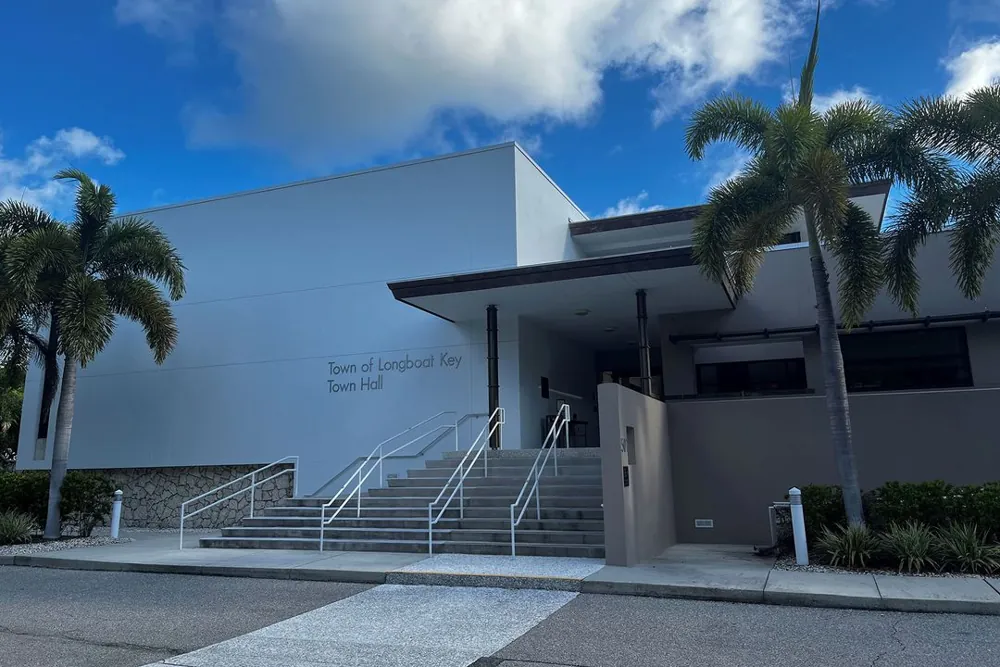
Municipal government work across Southwest Florida covers city halls, administrative facilities, public safety buildings, libraries, parks and recreation structures, and public works facilities. Each municipal engagement brings its own procurement framework, funding structure, stakeholder stack, and operating constraints, and Magnum's project teams carry the permitting, scheduling, and compliance disciplines that municipal owners require from preconstruction planning through closeout.
Water authorities and utility districts represent a distinct specialization. Water and wastewater facility construction demands deep coordination with operators whose process systems cannot stop, outage scheduling approved months ahead, instrumentation and controls expertise transferred to operations staff, and commissioning that satisfies regulators as well as engineers. Magnum's experience with water authorities throughout Southwest Florida reflects this operational understanding.
Beyond these core public segments, the firm's public-facing commercial work in aviation, healthcare, and hospitality applies the same operational-continuity methodology — phased construction, stakeholder communication, and schedule control — that public agencies require. Whether under Construction Management at Risk, Design-Build, General Contracting, or continuing services agreements, Magnum delivers the planning depth and accountability structure that public-sector work demands.
Public agencies that achieve the best construction outcomes treat contractor selection as the highest-leverage decision in the entire project lifecycle. The firms worth hiring carry proven public-sector track records, financial and bonding strength that backstops their commitments, safety cultures that protect workers and the public, scheduling systems that hold up under scrutiny, and the accountability instincts that turn multi-year construction relationships into assets rather than risks.
For municipalities, school districts, water authorities, and public agencies throughout Southwest Florida, Magnum Builders brings that combination to every engagement. From Sarasota County Schools campuses to municipal facilities and water authority infrastructure, Magnum's government construction practice is built on the planning depth, compliance discipline, and long-term reliability that public-sector work demands.


