

Choosing among government general contractors is the decision that determines whether your agency's next project becomes a community asset or a public problem. Municipalities, airport authorities, school districts, and public agencies planning facility upgrades, aviation improvements, or long-term infrastructure work need more than a builder — they need a partner who understands procurement law, occupied-site phasing, compliance documentation, and the accountability that comes with spending public funds.
For public agencies across Southwest Florida, Magnum Builders delivers exactly that partnership. With experience spanning Sarasota County Schools, municipal facilities, water authorities, and aviation environments, Magnum works alongside agencies from preconstruction through long after occupancy — as a general contractor, construction manager, and long-term continuing contract partner.
Government general contractors manage the complete construction lifecycle for public owners. That scope includes preconstruction planning — cost estimating, value engineering, constructability review, and permitting strategy — followed by construction execution with subcontractor coordination, quality control, safety management, and documentation that satisfies public record obligations. The work continues through commissioning, closeout, and warranty support, because public facilities remain the contractor's responsibility long after the ribbon is cut.
Delivery method flexibility distinguishes capable public-sector firms. Under Construction Management, the contractor serves as the owner's advisor, providing open-book cost transparency and early collaboration with the design team. Under Design-Build, the contractor carries both design and construction responsibility in a single contract.
Traditional General Contracting executes completed documents against a fixed price. Many agencies also rely on Continuing Contract Services for recurring capital programs — standing agreements that eliminate repeated procurement for renovations, upgrades, and smaller capital work across a portfolio.
For agencies evaluating contractors, the question is not simply what services a firm offers, but whether those services match the agency's statutory authority, funding structure, and internal capacity. Magnum Builders works across all major public delivery methods and can help your agency determine which approach best fits your project.
What qualifications should agencies prioritize when hiring government general contractors for municipal, aviation, or school construction?
Agencies should prioritize documented experience with comparable public facilities, financial stability and bonding capacity, safety performance records, demonstrated expertise in phased construction around occupied operations, and familiarity with the specific procurement rules, funding compliance, and documentation requirements that govern public-sector work in Florida.
The evaluation process matters because public construction failures are public events. A delayed school opening, a municipal project that exceeds budget, or an aviation project that disrupts operations becomes a matter of public record and board accountability. Agencies that verify contractor qualifications rigorously before award — checking references across multiple completed projects, reviewing safety metrics, examining financial statements, and interviewing the specific project team rather than just the firm — consistently achieve better outcomes.
Qualification standards for construction contracting are managed through the Florida Department of Management Services, reflecting the licensing, financial responsibility, and experience requirements that state and local agencies apply when selecting construction firms for public work.
Magnum Builders' public-sector portfolio spans the full range of facility types that Southwest Florida agencies deliver. Educational construction for Sarasota County Schools includes campus renovations, classroom additions, and capital improvement projects executed within the academic calendar's unforgiving schedule windows — phased around testing periods, completed during summer breaks, and built with the safety separation that occupied campuses demand.
Municipal construction covers city halls, administrative offices, public works facilities, libraries, and community buildings. Each municipal engagement brings its own procurement framework, funding mix, and stakeholder structure, and Magnum's project teams navigate these variations with the permitting knowledge and communication discipline that public-sector work requires.
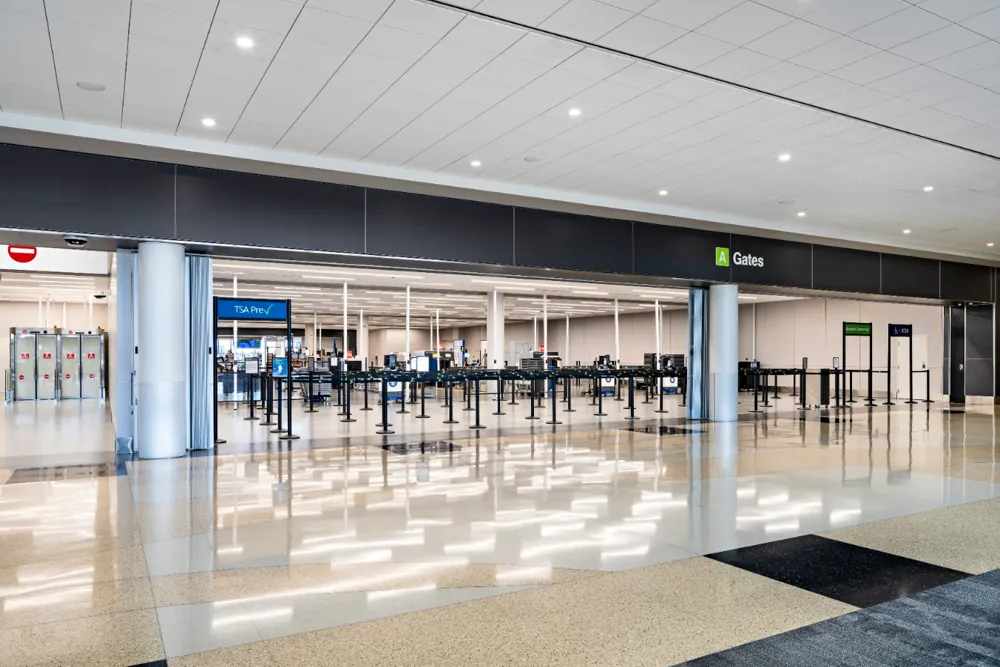
Aviation infrastructure represents a specialized capability. Work at airports demands coordination with FAA regulations, TSA security protocols, airside access procedures, and phasing that keeps runways, taxiways, and terminal operations functioning through construction. Public agencies managing aviation improvements need contractors who have already solved these problems on prior projects.
Water authority and utility-related construction rounds out the practice. These projects involve process systems that cannot stop, outage windows approved months in advance, and commissioning that satisfies regulatory agencies as well as engineers.
Support begins before the contract is signed. Magnum Builders' preconstruction team works with agency staff, design professionals, and stakeholders to develop realistic budgets, achievable schedules, and phasing plans that account for operational constraints. This early investment prevents the budget surprises and schedule delays that undermine public projects.
During construction, support manifests as communication systems calibrated to public governance. Progress reporting arrives formatted for staff review and board briefings. Cost controls run on open-book principles under management-based delivery methods. Change conditions are surfaced transparently and priced fairly, without the adversarial posturing that turns construction disputes into public spectacles.
For agencies managing recurring capital programs, Magnum's continuing contract relationships provide ongoing capacity without repeated procurement. The firm maintains standing agreements that allow cities, counties, and districts to initiate renovation and improvement work as needs arise, with the contractor's institutional knowledge of the agency's facilities, standards, and approval processes carried forward from one project to the next.
Scheduling reliability forms the foundation of every Magnum engagement. Public construction schedules are public commitments — when a school must open on time, when a fire station must maintain response coverage, when a municipal project must align with grant deadlines, Magnum builds schedules with real procurement durations, weather allowances, and coordination milestones that hold up under scrutiny.
The public sector punishes inexperience in ways the private sector does not. A contractor unfamiliar with prevailing wage documentation, public records obligations, or the approval rhythms of elected bodies creates friction that experienced firms avoid entirely. Agencies partner with experienced government contractors because the cost of learning on a public project is borne by the community.
Experience translates directly into risk management. Experienced contractors anticipate utility conflicts before excavation begins. They schedule around hurricane season in Southwest Florida rather than hoping to avoid it. They understand which permitting pathways move fastest and which require early escalation. They know that a change order process that works for private developers may violate procurement rules for public owners.
Perhaps most importantly, experienced government contractors understand that their client's success is measured in decades, not months. A school built to last forty years needs different decisions at every stage than a building designed for short-term occupancy. Public infrastructure must serve quietly and reliably long after the construction team has demobilized. Contractors who have built public assets through multiple economic cycles bring that long-term perspective to every recommendation.
Magnum Builders has built its reputation on exactly this orientation. As one of the government general contractors Southwest Florida agencies return to project after project, Magnum approaches every engagement as the continuation of a partnership, not the completion of a transaction.
The first step is engaging a contractor during the planning phase, before design decisions lock in costs and constraints that later prove expensive to change. Early contractor involvement — whether through Construction Management, Design-Build, or traditional design-bid-build with constructability review — produces better budgets, more accurate schedules, and fewer change orders during construction.
Agencies should also assess their internal capacity and statutory authority early. Does the project team include staff who have managed public construction before? Does the agency have continuing contract authority that could streamline smaller capital work? Are funding sources fully secured, and do they carry compliance obligations that affect procurement? Answering these questions early prevents mid-project surprises.
For agencies without recent large-project experience, selecting a contractor with strong preconstruction capabilities becomes even more important. Magnum Builders guides agencies through feasibility analysis, programming, budget development, and delivery method selection — building the foundation that successful projects require.
Public construction timelines are managed through a combination of realistic planning, disciplined updating, and transparent communication. Credible schedules begin in preconstruction with real durations for permitting, procurement of long-lead materials, and phased construction around occupied operations. Holiday shutdowns, hurricane season, and agency decision cycles are built into the baseline rather than discovered as delays.
During construction, the schedule becomes a management instrument updated at defined intervals, analyzed for variances, and translated into lookahead plans for field crews. When conditions change — unforeseen utility conflicts, design revisions, material delays — the schedule is revised with clear communication about impacts and recovery strategies. The goal is not a schedule that never changes, but a schedule that stakeholders trust because it reflects reality and responds to change with discipline.
Public scrutiny adds a dimension private projects lack. A school opening date is announced publicly. A municipal project completion appears in board minutes and press releases. Agencies need contractors who treat schedule credibility as a reputational asset, because the contractor's name is attached to the outcome as visibly as the agency's.
Public construction projects succeed when agencies partner with contractors who understand that every decision affects not just the building, but the community that funds it. Government general contractors who bring preconstruction depth, scheduling discipline, communication systems, and long-term accountability transform capital plans into community assets that serve for generations.
Magnum Builders has built its practice on exactly this partnership model across Southwest Florida. From Sarasota County Schools to municipal facilities, water authority infrastructure, and aviation environments, the firm delivers the experience, systems, and public-sector orientation that agencies need.
Contact Magnum Builders for Your Public Facility Project

